TGIF, Mar 6, 5:30pm
This Friday we are treated to enchanting Native American Music for Piano, played by Roberta Rust. Composers of the music are Connor Chee and Louis Ballard. Doors to the sanctuary open at 5:15pm and the concert begins at 5:30pm. The concert is free with donations accepted.
Program
From The Navajo Piano (2014) by Connor Chee
Navajo Vocable No. 1 (b. 1987)
Navajo Vocable No. 3
From The Four Moons ballet pas de quatre (1967), Louis W. Ballard (piano arrangement by the composer) (1931-2007)
The Osage Variation
The Cherokee Variation
From Scenes of Dinétah (2020) by Connor Chee
Female Rain
Fry Bread
From Four American Indian Preludes (1963) by Louis W. Ballard
Nikatoheh (Love Song)
To’Kah’Ni (Warrior Dance)
From The Navajo Piano (2014) by Connor Chee
Navajo Vocable No. 8
Navajo Vocable No. 12
The Artists
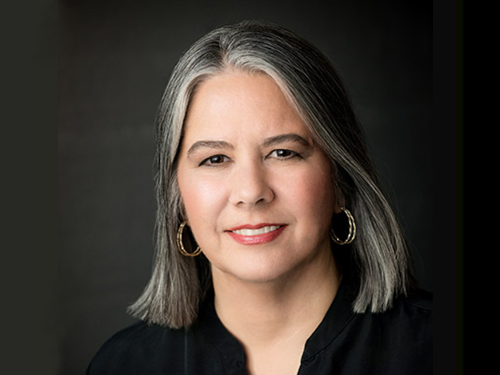
Roberta Rust, Pianist
Roberta Rust has concertized to critical acclaim, appearing in recital at prestigious concert halls worldwide and collaborating with leading ensembles. Her artistry has been enthusiastically hailed for recordings on the Navona, Centaur, and Protone labels. Rust has performed at such venues as Carnegie Hall’s Weill Recital Hall, New York’s Merkin Concert Hall, Rio de Janeiro’s Sala Cecilia Meireles, Washington’s Corcoran Gallery, Havana’s Basilica and Seoul’s KNUA Hall. She has appeared with the Lark, Ying, Serafin, Amernet and Fine Arts String Quartets and as soloist with the Houston Symphony, New World Symphony, Philippine Philharmonic, Redlands Symphony, Boca Raton Symphonia, Knox-Galesburg Symphony, Symphony of the Americas, Frederick Symphony, and orchestras in Latin America. Festival appearances include Miami’s Mainly Mozart Festival, the Philippines’ Opusfest, the Palm Beach Chamber Music Festival, Festival Miami, Long Island’s Beethoven Festival, and France’s La Gesse. She served as Artistic Ambassador for the United States, was awarded a major National Endowment for the Arts grant, and also received recognition and prizes from the Organization of American States, National Society of Arts & Letters, and International Concours de Fortepiano (Paris).
Dr. Rust serves as Artist Faculty-Piano/Professor and head of the piano department at the Lynn University Conservatory of Music in Boca Raton, Florida. During the summers she has served on faculty at the Adamant Music School in Vermont and the Rebecca Penneys Piano Festival in Tampa, Florida. She has given master classes throughout the Americas and Asia including at Rice University, Northwestern University, the San Francisco Conservatory, University of Southern California, the Yong-Siew Toh Conservatory at the National University of Singapore, and the Shanghai, Xi’An, and Beijing Conservatories. She is also a widely respected adjudicator and has served on the juries of several noted competitions including the American Piano Awards, the Bösendorfer-Yamaha USASU International Piano Competition, Florida Young Artist International Competition, MTNA competitions, at the New World Symphony, Chautauqua and Brevard Festivals, and at the Colburn School’s Music Academy. Rust has been presented in performances, master classes, and sessions at The Piano Conference: NCKP and the MTNA National Conference, at the Fondation Bell’Arte International Certificate for Piano Artists program, the Manila International Piano Masterclasses Festival, and the University of Florida International Piano Festival.
Roberta Rust was born in Houston, Texas, resides in South Florida, and is a Lakota descendant. She studied at the Peabody Conservatory, graduated summa cum laude from the University of Texas at Austin, and earned performer’s certificates in piano and German Lieder from the Mozarteum in Salzburg. A student of Ivan Davis, Artur Balsam, John Perry, and Phillip Evans, she received a master’s degree from the Manhattan School of Music and a doctorate from the University of Miami. Master class studies were with Gary Graffman, Leon Fleisher, Carlo Zecchi, and Erik Werba. For more information please visit www.robertarust.com.
Connor Chee, Composer
 Originally from Page, Arizona, Navajo pianist and composer Connor Chee is known for combining his classical piano training with his Native American heritage. Chee made his Carnegie Hall debut at the age of 12 after winning a gold medal in the World Piano Competition. A graduate of the Eastman School of Music and the University of Cincinnati’s College-Conservatory of Music, Chee’s solo piano music is inspired by traditional Navajo chants and songs.
Chee has released studio albums of original pieces and piano transcriptions of Navajo music. The Navajo Piano won Best Instrumental Recording at the 16th Annual Native American Music Awards, and his piece “Beginnings” won Best New Age Song. Chee’s release, Scenes from Dinétah, features piano pieces written about elements of Navajo life and culture. It has been accompanied by the release of several music videos filmed on the reservation, directed by Navajo filmmaker Michael Etcitty Jr. Chee currently lives in Phoenix, Arizona. For more information, please visit www.connorchee.com.
Louis W. Ballard, Composer
 Louis Wayne Ballard, born at Devil’s Promenade, Oklahoma, on July 8, 1931, was acknowledged during his lifetime as the leading Native American composer of classical music, creating major symphonic works, choral works, chamber music, and ballet music. His music received premieres at Lincoln Center, Kennedy Center, the Smithsonian Institution, Hollywood Bowl, Town Hall, and Carnegie Hall. He used Indian subjects authentically without sacrificing his own originality as a composer.
His ancestry includes a principal chief of the Cherokee Nation and a medicine chief of the Quapaw Nation, as well as Scottish, French and English forebears. His Quapaw name, Honganózhe, means “Stands with Eagles.” Ballard’s honors include National Indian Achievement Awards, grants from the Rockefeller Foundation, Ford Foundation and National Endowment for the Arts, ASCAP Awards, the first MacDowell Award for American Chamber Music and a Lifetime Musical Achievement Award by First Americans in the Arts. He studied at the University of Oklahoma and received multiple music degrees from the University of Tulsa. His composition teachers included Milhaud, Castelnuovo-Tedesco, and Surinach. As a prominent educator, he was music program director for the Bureau of Indian Affairs and developed a bicultural music education program that earned him a Distinguished Service Award from the Central Office of Education and a citation in the Congressional Record.
He made his home for many years in Santa Fe, New Mexico and died there on February 9, 2007. Dr. Ballard wrote, “It is not enough to acknowledge that American Indian music is different from other music, what is needed in America is an awakening and reorienting of our total spiritual and cultural perspective to embrace, understand and learn from the aboriginal American what motivates his musical and artistic impulses.” For more information about Dr. Ballard, visit the website: lwballard.com