
TGIF, Oct 24, 5:30pm
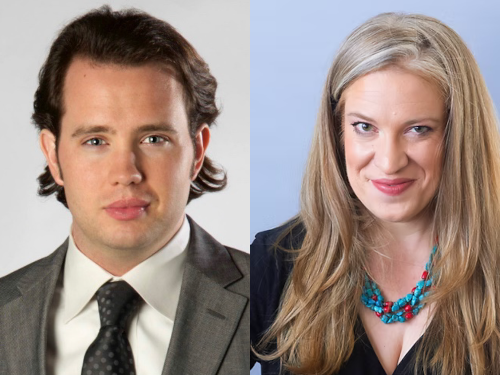
This Friday we welcome Sean Stanton, an accomplished opera singer, accompanied by Kristin Ditlow on the piano. They will be performing selections from Beethoven, Caplet, and Bolcom. Doors to the sanctuary open at 5:15pm and the concert begins at 5:30pm. The concert is free with donations accepted.
Program
An die ferne Geliebte, L. van Beethoven (1770-1827)
Ziemlich langsam und mit Ausdruck
Poco Allegretto
Allegro assai
Nicht zu geschwinde, angenehm und mit viel Empfindung
Vivace
Andante con moto, cantabile
Tempo I: Ziemlich langsam und mit Ausdruck
Le vieux coffret, André Caplet (1878-1925)
Songe
Berceuse
In una selva oscura
Forêt
From Cabaret Songs, William Bolcom (b. 1938)
Song of Black Max (As told by the deKooning boys)
George
Notes: An die ferne Geliebte, Op. 98 (1816)
Ludwig van Beethoven (1770 – 1827)
Text: Alois Jeitteles (1794 – 1858)
Ludwig van Beethoven’s “An die Ferne Geliebte” stands as a pivotal work in the lieder genre, marking a significant departure from traditional song cycles. Composed in 1816, during the height of the Romantic era, this piece reflects Beethoven’s response to the cultural and artistic currents of the time. Beethoven lived and worked in the vibrant city of Vienna, drawing inspiration from its cultural richness despite personal challenges, including his worsening deafness and financial difficulties. His meticulous attention to harmonic language, rich melodic lines, and the seamless integration of voice and piano firmly places this composition within the Romantic style while expanding the influence of the lieder.
The text was written by the Czech poet Alois Jeitteles, reflecting a cross-cultural influence in the Romantic spirit. Jeitteles, known for his poetry and his profession as a physician, brought a unique perspective to his literary works, distinguishing him from many of his contemporaries. His poetic craftsmanship adds a layer of introspection to the narrative, with the character’s journey serving as a metaphor for a universal human experience. Jeitteles’s verses tell the story of a man separated from his beloved and seeking solace in nature’s embrace. As the character embarks on his introverted journey alone, he finds healing outside within nature. Beethoven’s setting mirrors the emotional contours of the narrative with a clear proclamation that this is one journey. The use of recurring musical motives enhances narrative cohesion, allowing listeners to immerse themselves in an unfolding story. This structure enhances the piece’s thematic coherence and emotional resonance, allowing the listener to experience a continuous emotional journey.
The year 1816 also witnessed the premiere of other noteworthy compositions, including Beethoven’s own “String Quartet No. 14 in C-sharp minor, Op. 131,” considered one of his late masterpieces. This string quartet shared the same period of creativity and introspection. The two works offer a fascinating glimpse into Beethoven’s multifaceted artistic exploration during this tumultuous period. Beyond Beethoven, 1816 also saw the premiere of Franz Schubert’s “Der Erlkönig,” a seminal work in the lieder genre. Schubert’s composition, based on a poem by Johann Wolfgang von Goethe, exemplifies the intense and dramatic storytelling that characterizes Romantic society. In the orchestral realm, Gioachino Rossini’s opera “The Barber of Seville” premiered in 1816, marking a significant contribution to the operatic repertoire. Rossini’s comedic masterpiece contrasts with the introspective nature of Beethoven’s Lieder, yet it reflects the diverse artistic landscape of the time.
The Artists
Sean Stanton
Sean Stanton, a distinguished singer, educator, and clinician, has built a career of leading performances with renowned companies such as Opera Southwest, Central City Opera, Opera North, Opera on the James, and Opera Steamboat.
This past summer he was an apprentice artist with Berkshire Choral Festival, teaching artist at Opera San Antonio, and presented at the Performing Arts Medical Association at John Hopkins.
2024/2025 season highlights include a LA NATS Chapter sponsored recital of Schubert’s Winterreise, J.S. Bach’s Ich habe genung BWV 82 with the St. Paul’s Chamber Orchestra (Philadelphia), and An Evening with Willa Cather, part of the Library Foundation of Los Angeles ALOUD series.
Sean has been recognized with numerous awards, including the Lola Fletcher Award from the American Opera Society and honors from James Toland Vocal Arts, the New York Lyric Opera Theatre, Classical Singer, the Bel Canto Foundation, and the Luminarts Cultural Foundation. His competitive achievements also include winning first place in the Chicago, Illinois, and Central Region NATS competitions. He has appeared in masterclasses with artistic legends such as Sherrill Milnes, Renée Fleming, Dame Emma Kirby, and John Wustman.
Before relocating to Los Angeles, Sean performed extensively with the Lyric Opera of Chicago Chorus, the Chicago Symphony Chorus, and the Grant Park Chorus. He was also a teaching artist with Music of the Baroque’s outreach program, Strong Voices.
Currently, Sean is pursuing a Doctor of Musical Arts degree at the University of Southern California, where he holds the position of Head Teaching Assistant for Vocal Arts.
Kristin Ditlow
Pianist, conductor and coach Kristin Ditlow is enjoying a performance and teaching career throughout the United States and abroad. She has appeared in concert throughout North America, mainland China, the United Kingdom, France, Germany, Italy, Hungary, Austria, and the Czech Republic.
Her solo debut piano CD, Passages, has received national accolades. Harry Musselwhite of the Rome News-Tribune wrote that “the recording … is sonically breathtaking and her playing ranges from intimate pianistic thoughts to thundering room-shaking outbursts. She is a consummate interpreter.” In a review by musicologist Ralph Locke, Boston’s The Arts Fuse remarks, “I have played this album repeatedly for weeks … [the performances] are deeply affectionate: I sometimes felt I could hear Ditlow thinking about the (silent) words, noticing a surprising modulation, or responding to the tension-and-release within a musical phrase.”
Travel, wonder and exploration are greatly important to this artist – and her playing reflects it. Critics have hailed her performances as “fiery, with great thrusts of energy” (Bethlehem Morning Call), and containing a “burnished color and sense of passion” (The Philadelphia Inquirer). Her foundational training has been as a classical pianist. Yet, she has branched out into conducting, artist teaching, arranging, improvising and composing. Her love of musical collaborations dovetails into her solo performances, and her virtuoso technique and musicianship inform her presence at the keyboard and on the podium.
She is the co-founder and co-artistic director of Die Liederreise, a unique musical exchange program that takes students to Germany in the summer for two weeks to follow in the footsteps of great Western Classical Music Composers. During the summer of 2025, she will also return to the Festival of International Opera and the Fondazione Pergolesi Spontini to conduct La gare generose (in Italy). In December of 2025, she will record a CD of violin and piano music with violinist Guillaume Combet, featuring all-women composers, under the Meyer-Media label.
Ditlow holds degrees from the Oberlin Conservatory of Music, Westminster Choir College, and a Doctorate of Musical Arts from the Eastman School of Music, with further training at the Tanglewood Music Center, San Francisco Opera Center (Merola), and the Franz Schubert Institut. She holds the titles of Associate Professor of Vocal Coaching at the University of New Mexico and Music Director of the University of New Mexico Opera Theatre.